Silicone sheets for surgical scars: what the evidence supports
Clinics hand out silicone gel and sheets after surgery as routine. Two Cochrane reviews looked at whether they work. The answer is more cautious than the packaging.
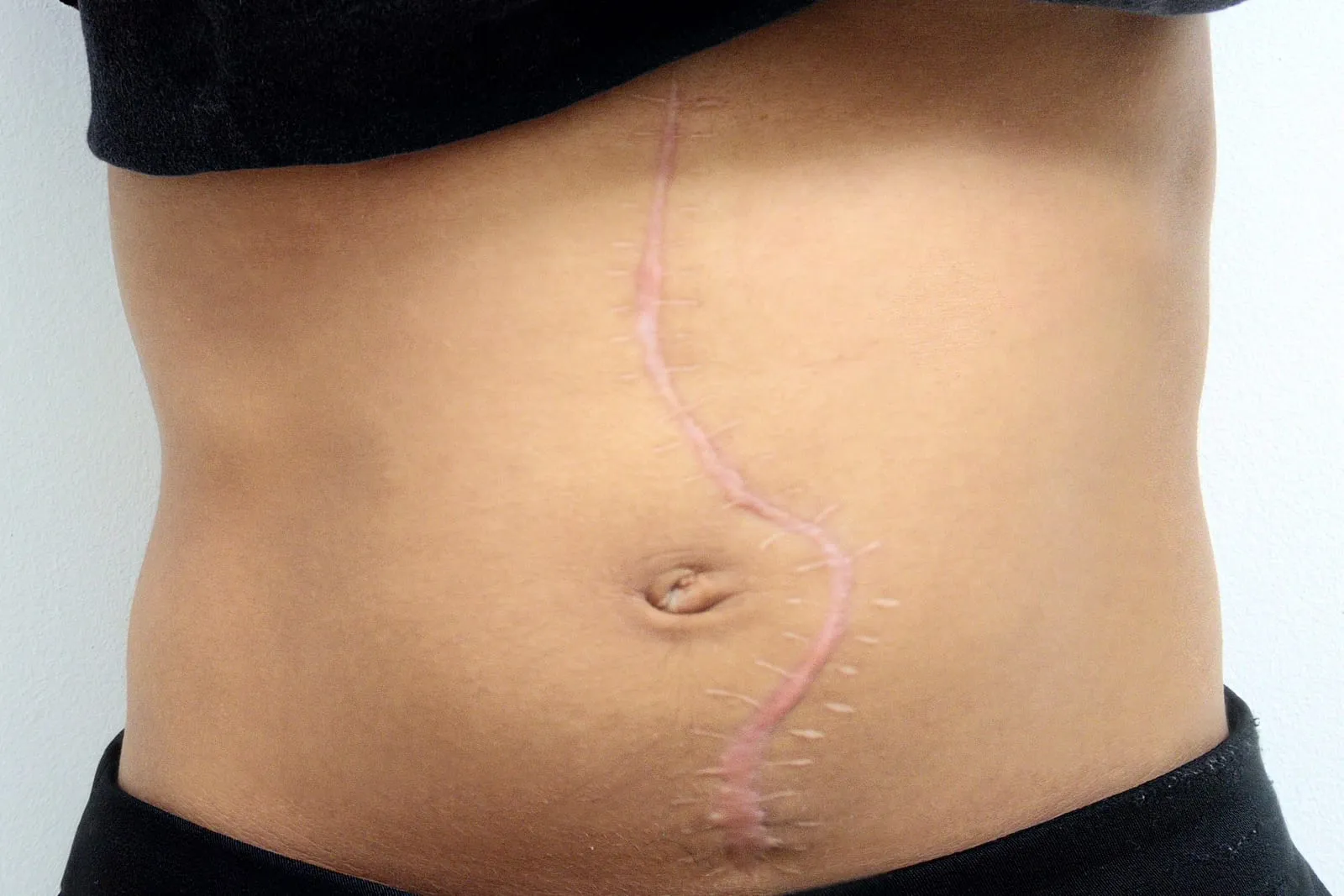

Somewhere in the bag you carry out of a Korean clinic, between the antibiotics and the instructions, there is usually a tube of silicone gel or a packet of thin, sticky, translucent sheets. Use it every day, you are told. For months.
It is a sensible question whether that does anything. Scar products are a large business, the before-and-after pictures are persuasive, and a scar will fade over a year whatever you put on it. Fortunately this is one corner of cosmetic aftercare that has been examined properly, by the people whose job is to be unimpressed.
What kind of scar are we talking about?
Every cut that goes through the full thickness of the skin leaves a scar. Most surgical scars start red and slightly firm, then flatten and pale over many months. That is normal healing and it is not what the research is about.
The trials concern scars that heal abnormally. Cochrane, the international organisation that reviews medical evidence, describes two types. A hypertrophic scar is raised and thickened but stays within the boundary of the original wound; it tends to follow surgery or burns. A keloid goes further and can spread into the surrounding skin; it can follow injuries as minor as an ear piercing and is more common in darker skin.
Location matters as well. According to Cochrane, raised scars are more likely on certain sites, including the lower face, the neck and the upper arms. Several of those are places cosmetic surgery leaves incisions.
The scale is not trivial. Cochrane cites an estimate that in high-income countries alone about 100 million people develop scars each year.
What is silicone sheeting supposed to do?
Silicone gel sheets are soft, flexible dressings made of medical-grade silicone that stick to intact skin. They are worn over a healed wound for many hours a day. Cochrane describes them as commonly used on healing skin to help soften and flatten a raised scar, and as one of the most commonly used treatments for hypertrophic scars. Their use for this purpose began in 1981, with burn scars.
Why covering a scar with silicone should change it is not settled. The explanation usually offered is that the sheet seals the surface and keeps the scar hydrated, which is thought to calm the overproduction of scar tissue. The reviews discussed here test whether the sheets work, not how.
Does it prevent raised scars?
A Cochrane review, updated in 2013, pooled 20 trials involving 873 people aged from under two to 81. It looked at two questions: whether silicone sheeting prevents abnormal scars in newly healed wounds, and whether it treats existing ones.
On prevention, in people prone to scarring, sheeting reduced the incidence of hypertrophic scars compared with no treatment. The risk was roughly halved in the pooled figure.
Then comes the caveat, and the reviewers do not bury it. The studies were of poor quality and highly susceptible to bias. Their summary is that there is weak evidence of a benefit as prevention in high-risk individuals, and that the poor quality of the research means a great deal of uncertainty remains.
Does it improve scars that have already formed?
The same review found that in treatment studies, sheeting produced statistically significant reductions in scar thickness and improvements in colour. Again the trials were judged to be of poor quality.
Cochrane returned to the treatment question with a fresh review covering evidence up to April 2021. It included 13 studies with 468 participants who had hypertrophic scars from surgery, injury, burns or scalds. The findings read like a list of shrugs:
| Comparison | What the 2021 review found |
|---|---|
| Silicone sheets versus no silicone sheets | Uncertain whether sheets improve appearance |
| Silicone sheets versus silicone gel | Uncertain; one study of 32 people |
| Silicone sheets versus onion extract | Sheets may slightly improve appearance |
| Silicone sheets versus pressure garments | Sheets may reduce pain |
| Silicone sheets versus steroid injection, laser or pulsed light | Not enough information to compare |
The reviewers rated their confidence in all of it as low or very low. Only four of the studies reported professional assessments of the scars in a form the review could use, and none gave usable results for how patients themselves judged their scars afterwards. That last gap is striking. The person who has to live with the scar was not usefully asked.
So is it worth using?
The evidence supports a modest claim: silicone sheeting may help prevent raised scars in people at higher risk, and it may improve thickness and colour in scars that have already become raised. It does not support the stronger claims on some packaging.
Two things keep it in surgeons’ aftercare bags regardless. Weak evidence is a statement about the quality of the trials, not proof that the treatment fails. And silicone on intact skin has little downside beyond cost, effort and the occasional rash under the adhesive. A cheap, low-risk treatment with a plausible benefit is a reasonable thing to try, as long as you know that is what it is.
If you scar easily, or the incision is in one of the higher-risk sites, the case for using it is stronger. If your scars have always healed to fine pale lines, the case is weaker, and you are not being reckless if you stop.
What about the alternatives?
The 2021 review could not compare silicone with steroid injections, laser therapy or pulsed light, because the studies did not give enough information. That is not a verdict on those treatments. They are used by doctors for raised scars and have their own research, which these reviews did not set out to cover. The point is narrower: nobody can tell you from this evidence that silicone is better or worse than they are.
What should you do after surgery?
- Follow the wound-care instructions your own surgeon gave you first. They know where the incision is and how it was closed.
- Do not put a sheet or gel on a wound that is still open, wet or scabbed. Silicone sheeting is for intact skin. Ask the clinic when you may start.
- Ask how many hours a day and for how many months they recommend, and buy enough before you fly home, or check that the same product is sold where you live.
- Take a dated photograph of the scar every month. Slow change is invisible day to day, and photographs are what a doctor will want to see.
- Watch for a scar that becomes more raised, itchy or painful after the first weeks, or one that grows beyond the original line. That is the time to see a doctor about other treatments, not to buy more sheets.
A scar from surgery abroad will mostly be managed at home, by you, long after your last appointment. Before you book, it is fair to ask a clinic what scar follow-up it offers to patients overseas. Our clinic directory lists each clinic’s public contact details for exactly that kind of question.
Common questions
- Do silicone sheets work on every scar?
- The trials concern raised scars, the hypertrophic and keloid types. A flat, pale line that is healing normally is not what the research addresses, and there is little reason to expect a visible difference.
- Is silicone gel as good as silicone sheets?
- One small trial of 32 people compared the two, and the Cochrane reviewers could not tell whether there was a difference. Choose whichever you will actually use on that part of the body.
- Is a keloid the same as a hypertrophic scar?
- No. A hypertrophic scar is raised but stays within the original wound. A keloid can spread into the surrounding skin and is harder to treat. If a scar is growing beyond its original line, see a doctor.
Sources (4)
- Cochrane, Silicone gel sheeting for treating hypertrophic scars (CD013357), checked 13 November 2026
- Cochrane, Silicone gel sheeting for treating hypertrophic scars: plain language summary, checked 13 November 2026
- Cochrane, Silicone gel sheeting for preventing and treating hypertrophic and keloid scars (CD003826), checked 13 November 2026
- Cochrane, Silicone gel sheeting for preventing the development of hypertrophic scars and keloids: summary, checked 13 November 2026