Ghost surgery in Korea and the operating room CCTV law
What ghost surgery is, what Korea's operating room camera law has required since September 2023, and how a foreign patient can ask for a recording.
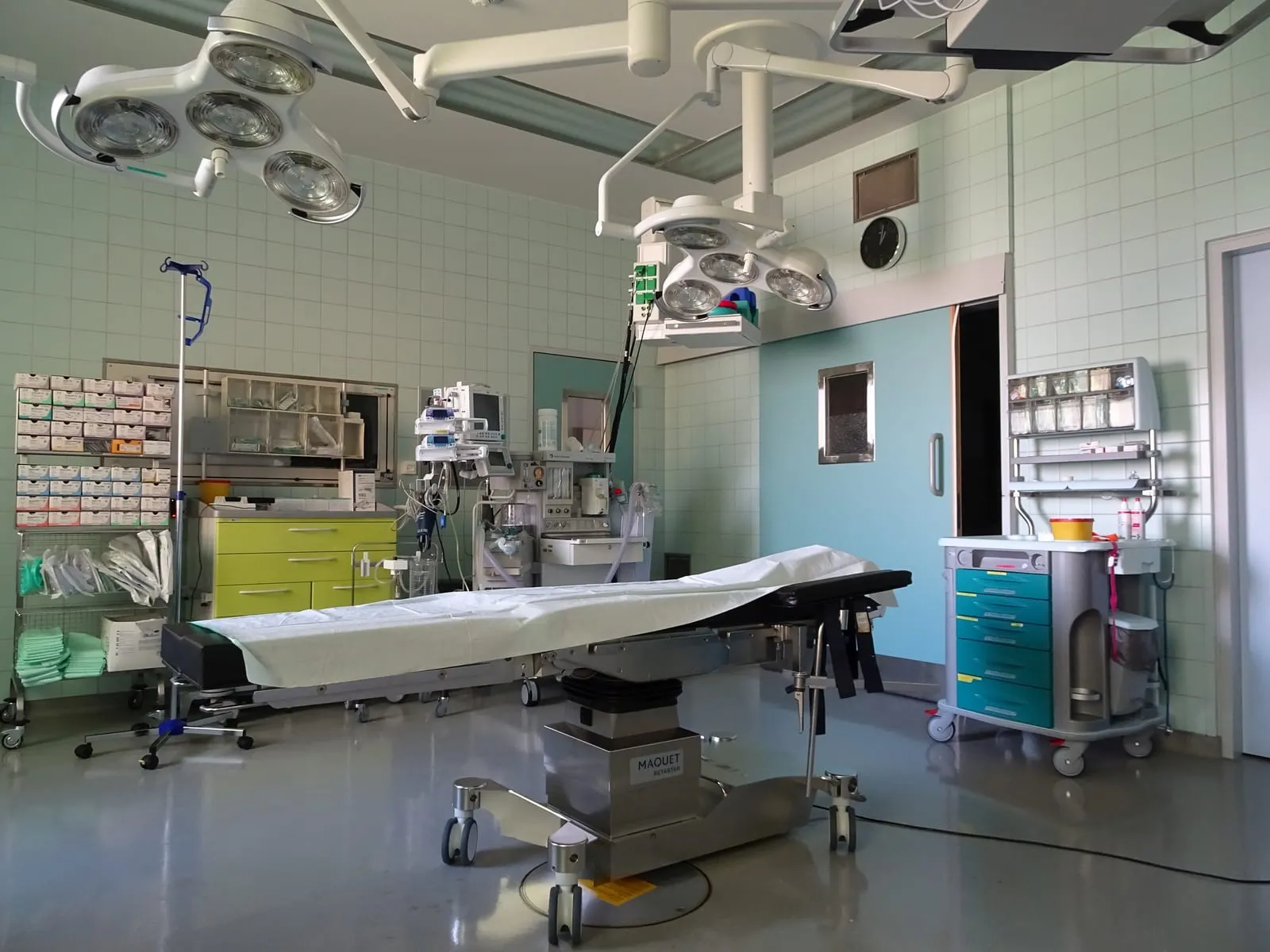

You meet the surgeon whose name is on the door. You like the before-and-after photographs, you agree on a plan, you sign. Then you are put to sleep, and the person who walks into the room is somebody else.
That is ghost surgery, and Korea is the only country that has tried to stop it by writing cameras into its medical law. For a foreign patient the law is a useful tool, but only for those who know it exists and how to use it, because it does nothing by default.
What is ghost surgery?
The term covers any operation carried out by a person other than the surgeon the patient consented to, without the patient knowing. The substitute may be a junior doctor, a doctor from another field, or someone with no medical licence at all. Because the patient is unconscious, there is normally no way to find out.
Reporting on the phenomenon traces it to plastic surgery clinics in the 2010s, as medical tourism grew and popular surgeons took more bookings than one person could operate on. It later appeared in spine hospitals as well. Legal scholars quoted in that reporting made a point that surprises many foreigners: Korean courts have treated ghost surgery as practising medicine without a licence, and not as battery, which is how a surgeon operating on someone else’s patient has been charged in the United States. Patient advocates argued that punishments were too light, and in one prominent case none of the doctors involved lost their licences permanently.
Public anger over cases like that one is what produced the camera law.
What does the law require?
In 2021 the Medical Service Act was amended to add Article 38-2, on the installation and operation of closed-circuit cameras in operating rooms. After a two-year grace period it took effect on 25 September 2023.
The core rules, as set out by the Ministry of Health and Welfare and in press coverage when the law took effect:
| Question | Rule |
|---|---|
| Where must cameras be installed? | In operating rooms used for surgery on patients who are unconscious, under general anaesthesia or sedation |
| When is an operation recorded? | When the patient or the patient’s guardian requests it |
| Can the clinic refuse? | Only on grounds defined in law |
| Is sound recorded? | No. Video only |
| How long is footage kept? | At least 30 days |
| Who can view it? | An investigating body or court on request, or anyone when the patient and all medical personnel involved consent |
Two details in that table are easy to miss. The law covers sedation, the “sleep anaesthesia” used for a great many cosmetic procedures in Korea, and not only full general anaesthesia. And recording happens on request. A camera on the ceiling that nobody asked to switch on protects no one.
When can a hospital refuse to record?
The law lists exceptions. Legal commentary on Article 38-2 describes them as including emergency surgery where the patient’s life is at risk, and high-risk operations that demand active intervention to save the patient. The reasoning is that a surgeon should not hesitate in a crisis for fear of how footage will look.
A scheduled cosmetic operation on a healthy adult is about as far from those exceptions as surgery gets. If a clinic tells you it cannot record a planned eyelid, nose or contouring operation, ask which legal ground it is relying on.
Can you actually watch the footage?
This is where expectations need adjusting. The recording is not a souvenir and the clinic will not hand it over on a memory stick.
Viewing is restricted to three routes: a request from an investigating authority, a request from a court, or the agreement of both the patient and every member of the medical staff who appears in it. Coverage of the law also notes that footage can be used in medical disputes and mediation. In practice, then, the recording is evidence held in reserve. Its value is that it exists if something goes wrong and a formal process begins.
The 30-day minimum is the other practical limit. A foreign patient who notices a problem two months later, back home, may find the footage has lawfully been deleted. If you have any concern after surgery, raise it in writing early and ask the clinic to preserve the recording.
Why do Korean doctors object?
The medical profession fought the law at every stage. An opinion piece in the Journal of Korean Medical Science pointed out that no other country enforces operating room cameras by statute, and warned of unintended consequences. Shortly before the law took effect, the Korean Medical Association and the Korean Hospital Association filed a constitutional complaint against it.
Their arguments are not frivolous. Surgeons may become defensive and avoid difficult but necessary operations. Footage of unconscious, undressed patients is a privacy risk in itself if it leaks, which is why the law requires cameras that are not connected to outside networks. And a camera shows who is in the room without showing whether the surgery was done well.
An ethics analysis from Ewha Womans University concluded that it is too early to say whether the law will achieve its main aim of reducing ghost surgery. That is a fair summary. The law deters the crudest version of the practice. It does not guarantee quality.
What can a foreign patient do?
- Ask before you book whether the clinic’s operating rooms have cameras and how a recording is requested. The answer tells you how the clinic regards the law.
- Make the request in writing, before the day of surgery, and keep a copy. Ask for written confirmation that recording was carried out.
- Have the operating surgeon’s full name written on the consent form, and ask that the same person confirms your identity and the procedure before you are sedated.
- If your procedure is under sedation, remember that the law still applies.
- Keep the 30 days in mind. If anything seems wrong, say so in writing within that window and ask for the footage to be kept.
- Check who you are dealing with. Our clinic directory shows each clinic’s registered name and type from public records.
None of this is an accusation. Most surgeons operate on their own patients. The request for a recording is simply the one protection Korean law offers that works only if you ask for it.
Common questions
- Are all operations in Korea recorded now?
- No. Cameras must be installed, but a surgery is recorded only when the patient or guardian asks. If you want a recording, request it before the operation.
- Can I watch the footage afterwards?
- Not freely. Viewing is allowed at the request of an investigating body or a court, or when the patient and all the medical staff involved consent. Recordings can also be used in medical dispute mediation.
- Does the law cover procedures under local anaesthetic?
- The requirement applies to operating rooms where surgery is performed on patients who are unconscious, under general anaesthesia or sedation. A procedure done while you are fully awake falls outside it.
Sources (8)
- Ewha Institute for Biomedical Law and Ethics, The Moral Debate over South Korea's New Law Requiring CCTV Cameras in Hospital Operating Rooms, checked 13 November 2026
- The Asia Business Daily, Mandatory Installation of CCTV in Hospital Operating Rooms Starting from the 25th, checked 13 November 2026
- The New Zealand Herald (New York Times syndication), South Korea turns to surveillance as ghost surgeries shake faith in hospitals, checked 13 November 2026
- The Nation (Yonhap), Surveillance cameras to be a must in South Korean hospital operating rooms, checked 13 November 2026
- The Korea Herald, Surveillance cameras in operating rooms to be mandatory from this month, checked 13 November 2026
- Chungbuk National University Law Research Institute, A Critical Review on the Installation and Operation of Closed Circuit Television in the Operating Room, checked 13 November 2026
- The Asia Business Daily, Mandatory Operating Room CCTV from the 25th: Korean Medical Association files constitutional complaint, checked 13 November 2026
- Journal of Korean Medical Science, Installation of CCTV in operating rooms: opinion, checked 13 November 2026
More on safety and regulation
How to tell a specialist clinic from its sign in Korea
Korean rules decide which clinics may put 'plastic surgery' in their name. Here is how to read a signboard, what the half-size rule is, and where it fails.
If surgery in Korea goes wrong: dispute options for foreign patients
How Korea's medical dispute mediation agency works for foreign patients, what its own figures show, and what to put in writing before surgery to protect yourself.